Need our help? Click the button and schedule an appointment with us today!
Timeshare Resales in 2026: Trends, Tips, and Red Flags


Connect with us!
Senior Qualification Specialist

Call us

Send a message
June 26, 2026
ACA Group
Timeshare Resales in 2026: Trends, Tips, and Red Flags
A timeshare listing can generate real online interest. What it rarely attracts is a qualified buyer. The FTC warns that sellers are often targeted by advance-fee scams. In 2026, timeshare resales can work for some owners, but the market rewards informed strategy over wishful thinking.
Low demand, transfer restrictions, and hidden fees can turn a simple sale into a lengthy, document-heavy process. Knowing how resales work, what they cost, and how to spot scam operators matters before money changes hands. ACA Group offers free resources to help you make an informed exit decision with confidence.
Table of Contents

How Timeshare Resales Work For Owners In 2026
If you’re wondering how timeshare resales work for owners, the short answer is: slowly, and with more paperwork than most people expect. The secondary market for timeshares operates very differently from what the original resort presentation suggested. What you paid at purchase rarely matches what a buyer will offer today.
What Actually Drives Resale Value
Annual maintenance fees, location, your season assignment, any outstanding loan balance, and points system flexibility all factor into what buyers will pay. A timeshare resale with high fees and a fixed off-season week is difficult to sell regardless of the asking price.
The Process Is Slower Than Most Owners Expect
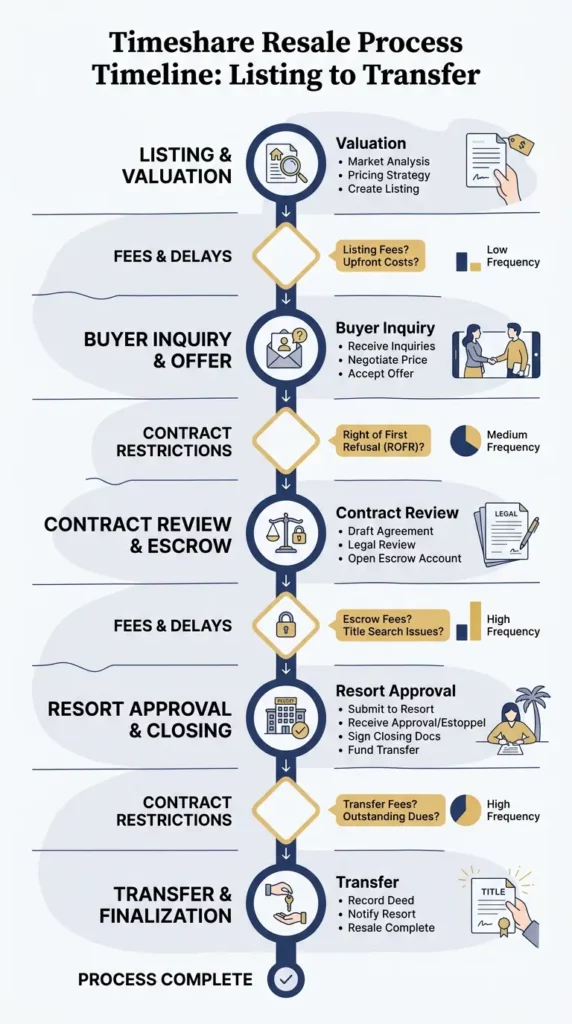
A timeshare resale requires ownership verification, an estoppel letter (a document confirming what fees or balances are owed), transfer approval, and buyer screening. State requirements vary by location and add more steps before anything can finalize. In Virginia, the Time-Share Act requires a certificate of resale and gives buyers cancellation rights. Florida’s consumer protections include mandatory disclosure timelines and refund rules. The selling your timeshare process involves more stages than most owners anticipate.
Check the Market Before You List
Many timeshare contracts sell for far less than the original purchase price, and others receive no offers at all. Before paying for a listing, check what comparable units are actually selling for on the secondary market. Common resale myths lead owners to overestimate demand and underestimate how long the process takes. Starting with realistic numbers protects you from spending money on a listing that may never close.
The Hidden Costs of Timeshare Resale That Sellers Often Miss
Most sellers go into the resale process focused on what they might receive, not what they’ll be asked to pay first. These costs are rarely spelled out during the original sales process, which is part of why so many sellers are caught off guard. Understanding the hidden costs of a timeshare resale before you list puts you in a much stronger position when it comes time to sign.
| Cost Type | When It Appears | Who Usually Pays | Why It Matters | Consumer Tip |
|---|---|---|---|---|
| Advertising Fee | Before listing goes live | Seller | Costs money before any buyer is found, with no sale guaranteed | Request a written refund policy before paying anything |
| Closing Fee | At time of sale | Seller or split | Covers legal and title processing; often overlooked when estimating net proceeds | Ask for an itemized closing estimate before agreeing to terms |
| Transfer Fee | At closing, charged by resort | Seller or negotiated | Adds to your closing costs and varies by resort contract | Confirm the exact amount directly with your resort |
| Resort Estoppel Fee | During transaction, before closing | Seller | Confirms what you owe the resort and must be completed before any transfer closes | Request this document early to avoid last-minute delays |
| Unpaid Maintenance Fees | At closing or before listing | Seller must clear these | Blocks the transfer if not cleared before closing | Check your account balance before you list |
| Special Assessment | Anytime, including mid-sale | Seller if assessed before closing | Adds an unexpected charge that can appear without warning, even after a buyer is found | Review your resort notices and account history regularly |
| Loan Payoff | At or before closing | Seller | Prevents the transfer from completing until the balance is paid in full | Contact your lender for the exact payoff amount before setting a sale price |
| Commission | At closing | Seller; deducted from sale proceeds | Reduces your final payout by a percentage of the sale price, often 10–30% | Confirm the commission rate in writing before signing |
A company that cannot clearly explain what its fee covers, what happens if no sale occurs, and how the transfer is completed is one worth walking away from. Reviewing your resale options alongside what a legitimate sale process involves can help you understand the full range of hidden timeshare resale costs before you commit to any service.
Are Timeshare Resale Companies Legitimate? Red Flags Owners Should Watch
The timeshare resale market has no shortage of companies promising fast results, but not all of them deliver what they advertise. A handful operate ethically, but the resale space has a well-documented history of predatory operators targeting owners who are already frustrated and financially stretched. Knowing what a legitimate timeshare resale company looks like, and what it doesn’t, can protect you from losing more money in an already costly situation.
These are the patterns that consistently appear in fraudulent or unreliable resale operations:
- They promise a guaranteed buyer. No one can guarantee a sale in the secondary market. This claim is one of the most persistent timeshare resale myths and is almost always used to justify collecting fees before any real work begins.
- They demand payment before providing any documented services. Asking for money before delivering a written contract, a clear refund policy, or a defined scope of work is a recognized scam pattern the FTC warns owners to watch for.
- They ask you to wire money before you have reviewed any documents. If a company pushes for a wire transfer before you have seen a contract or verified their services, that is a recognized pattern of timeshare fraud, as the FBI documents.
- Unverifiable credentials. Check BBB history, read independent reviews, and confirm whether the company holds any required licensing or brokerage status in your state. ACA Group’s resale resource guide outlines what to look for beyond surface-level branding.
- They cannot clearly explain what they do. A reputable company should tell you exactly what services are included, what happens if the timeshare does not sell, and how their process differs from a legal cancellation. If a company cannot answer those questions clearly and in writing, that alone is reason to walk away.
Owners who want to go deeper on any of these patterns can find a detailed breakdown of common scam tactics, including fake reviews and impersonation schemes, at ACA Group’s exit scam resource.

Timeshare Resales FAQ For Owners And Retirees
Deciding whether to sell a timeshare raises a lot of practical questions, especially if you’ve never been through the process before. Owners and retirees often want to know what the process really looks like, whether the companies offering help can be trusted, and what to do when resale doesn’t work out. These are some of the most common timeshare resale questions owners and retirees ask before making a decision.
How do timeshare resales actually work when you want to sell?
Selling starts with gathering your ownership documents and confirming your contract allows a transfer. From there, you list the property, screen buyers, and go through a resort approval process that can take weeks or longer. The guide on how to sell a timeshare by owner covers what to prepare and what to expect at each stage.
Are timeshare resale companies legitimate, or are many of them scams?
Some companies are legitimate, but fraud is common in this space. The FTC cautions that resale scams often involve upfront fees and guaranteed-buyer promises. The FBI has also warned that unsolicited outreach targeting timeshare owners is a frequent tactic. A trustworthy company provides its fee structure, refund policy, and service terms in writing before you pay anything.
Can retirees safely rely on the resale market to exit a timeshare?
Retirees can attempt a resale, but the market rarely delivers the financial recovery many expect. Scammers often target older owners with upfront fees and promises of quick sales. For those on a fixed income, those fees can create more strain than the timeshare itself. Reviewing common timeshare resale myths and speaking with an attorney before listing can prevent costly missteps.
What are my options if I can’t find a timeshare buyer?
Stalled resale attempts are more common than most owners realize. If the market isn’t moving, your contract may still offer a way out. An attorney can review your purchase documents for misrepresentation, undisclosed fees, or other grounds for cancellation. The full timeshare resales resource outlines what to consider when resale alone isn’t enough.
When Resale Isn’t the Answer, Know Where to Turn
It’s easy to assume resale will recover what you spent, but the math on resale costs rarely works out that way. Knowing when to stop waiting on a sale and start reviewing your legal options is where real progress begins.
FTC guidance recommends gathering your purchase agreement, payment history, and resort notices before engaging any third-party company. Exploring alternatives to timeshare resales through an exit review can reveal paths you didn’t know were available. A legal review can also surface rights you may not have known you had.
Get free guidance from ACA Group to compare your exit options and take your next step with confidence, then review our exit scam guide before signing anything new.
Fill out this simple form and a Timeshare Exit Strategist will be in touch with you.
Most Read | Popular Articles
December 14, 2023
The Process of Timeshare Credit Repair
Embark on a journey to financial freedom with our comprehensive guide on ‘The Process of Timeshare Credit Repair’. This enlightening blog post delves into the complexities of timeshare ownership and its impact on your credit score. From understanding how timeshare commitments affect your credit, to navigating negotiations with timeshare companies and dealing with collection agencies, each section offers in-depth insights and practical strategies. Learn how to structure effective repayment plans, dispute inaccuracies on credit reports, and seek professional help when needed. The post also provides valuable tips on rebuilding your credit score, outlines effective timeshare exit strategies, and educates on avoiding future timeshare scams. Understand your legal rights, discover long-term credit management strategies, and get inspired by real-life success stories. Whether you’re struggling with timeshare-related credit issues or looking to make informed decisions, this blog post is an invaluable resource for regaining control of your financial well-being.
October 6, 2023
Understanding the Perpetuity Clause in Timeshare Agreements
Timeshares can be confusing, right? Especially when we hear terms like “perpetuity clause.” So, what’s it all about? In this post, we’ll explain it in a way that’s easy to get. If you have a timeshare or are thinking about one, this is for you. Let’s jump in and make things clear! By the end of this article, you’ll feel more confident about this topic. No more scratching your head when the term comes up!
September 18, 2023
How to Protect Your Credit When Leaving a Timeshare
Worried about how leaving a timeshare might affect your credit? You’re not alone. Many owners hesitate to exit their contract out of fear it could damage their financial standing. But the truth is, not all exit strategies hurt your credit—some may even protect it. In this post, we break down how different exit methods impact your credit report, debunk common myths, and explain how a professional Timeshare Exit Program can guide you toward a clean, responsible separation from your ownership.
January 2, 2026
Mexico Timeshare Cancellation: The Process and Challenges Faced by Owners
Canceling a timeshare in Mexico is far more complicated than most owners expect. Different consumer laws, language barriers, and aggressive resort tactics often make self-cancellation ineffective and risky. This guide explains how timeshare contracts are enforced in Mexico, the most common mistakes owners make when trying to exit, and what legal options may help protect your finances and credit while ending the contract properly.
November 9, 2023
The Ethics of Timeshare Sales and the Path to Cancellation
Dive into the world of timeshares with our enlightening blog post that demystifies the sales tactics, legalities, and consumer rights that shape your vacation ownership experience. Uncover the truth behind high-pressure sales, learn the ins and outs of contract complexities, and arm yourself with the knowledge to make empowered decisions. Whether you’re a seasoned timeshare owner or considering your first purchase, this post is your roadmap to navigating the timeshare terrain with confidence. Click to unravel the secrets and take control of your timeshare journey!
November 30, 2023
Understanding Timeshare Exit Options: A Comprehensive Guide
Are you feeling trapped in your timeshare contract? “Understanding Timeshare Exit Options: A Comprehensive Guide” is your essential resource for navigating the complex world of timeshare exits. Our expertly crafted post delves into the myriad of options available, from legal routes to negotiation strategies, ensuring you’re equipped with the knowledge to make informed decisions. Whether you’re facing financial constraints, lifestyle changes, or simply seeking freedom from your timeshare obligations, this guide illuminates the path to a successful exit. Don’t let uncertainty hold you back. Click to discover the keys to unlocking your timeshare freedom today!
October 16, 2023
Timeshare Sales Tactics: Recognizing and Avoiding the Pressure
The timeshare industry is also notorious for its aggressive sales tactics. Potential buyers often find themselves in high-pressure sales presentations, bombarded with information and urged to make immediate decisions. This article delves into the world of timeshare sales tactics, helping readers recognize, understand, and navigate these often overwhelming sales pitches. Armed with knowledge, you can make informed decisions and avoid potential pitfalls.
November 6, 2023
Timeshare Cancellation: State Laws You Should Know
Unravel the complexities of timeshare cancellation with our in-depth guide. Discover how state laws shape your cancellation rights, the nuances of legal protections, and strategies to navigate the legal terrain confidently. This post is your ally in understanding the critical aspects of timeshare laws, ensuring you’re equipped with the knowledge to make empowered decisions about your timeshare journey. Dive in to safeguard your interests and take control of your timeshare experience.
December 9, 2023
Timeshare Special Assessment Fees Are On The Rise
Discover the vital insights in our latest blog post on the rising trend of timeshare special assessment fees. Uncover the reasons behind these increasing charges, their impact on owners, and expert opinions. We delve into global trends, offer real-life case studies, and provide strategic tips for managing these unexpected costs. This comprehensive guide is essential reading for current and prospective timeshare owners, arming you with the knowledge to make informed decisions. Click to learn how to navigate the complexities of timeshare fees and safeguard your investment.
September 12, 2023
Timeshares – Shift from Traditional Weeks to Point System
The timeshare industry has undergone a dramatic shift from traditional week-based models to complex point-based systems. While these new systems promise flexibility, many owners face rising costs, confusing rules, and limited availability. This post explores the real impact of the change, shares stories from affected owners, and outlines how to protect yourself—and what to do if you’re ready to exit your timeshare contract.
Related Posts